3D animation and video in Vienna.
A product film with no product built yet. An interior approved before the first wall goes up. A technical subject made watchable. Or the ten seconds of movement behind a hero section. Made by the same person who builds the website — which is where this normally goes wrong, because the file that arrives is then one the page can actually serve.
View evidenceProduct film without the product
Camera moves a real shoot cannot afford, on an object that may not be manufactured yet. Modelled and lit in Cinema 4D, rendered in Redshift, cut in After Effects and Premiere. A different colourway, a new pack size or another end frame is a re-render overnight rather than a second studio day — which is why this is often cheaper than the photography it replaces, not the luxury version of it.
Interiors and architecture, before they exist
A room, a facade or an event set lit with real light logic, so the atmosphere can be approved months before anyone commits money to it. The Lake Como interior film and the Obsidian Residence study in the archive were both built that way: one continuous camera move, materials that behave like the real ones, and a decision made from something you can watch rather than from a moodboard.
Making a technical subject watchable
Two years of it at Siemens: 2D tutorial and safety-guideline videos for SIMATIC WinCC Open Architecture — a SCADA platform for large control systems — turned into material a global audience actually watches. Before that, an animated explainer for the FMNR reforestation method for Awaken Trees in Vienna. The animation is never the hard part. Deciding what to leave out, and in which order the rest arrives, is.
Motion that survives the web
A film that makes a page slow has cost more than it earned. So: loops encoded twice and held behind a poster frame, muted autoplay that stands down for Save-Data and reduced-motion, vertical and square cuts taken from the same master, and — where a video would be the heavier answer — the same movement done in WebGL or plain CSS instead. The films on this site do not download at all until you ask for one.
One pipeline, one owner
Brief, boards, look development, render, cut, and the page it ends up on — one person the whole way, so there is no version of this where the film team and the web team blame each other for the same second of loading. Delivery is whatever the destination needs: a master, a web loop, social crops, and a poster frame identical to the first frame so nothing flashes when it starts.
A retail POS film where packaging, display architecture and camera rhythm turn a product system into a spatial brand moment.
A quiet architectural film built around daylight, material restraint and a continuous camera journey through a Lake Como interior.
A product-motion study that stages ski and snowboard equipment as sculptural objects through controlled light, color and mechanical choreography.
3D works in the public archive — six stills, three films
two years of 2D tutorial and safety video for WinCC OA
Cinema 4D and Redshift, cut in After Effects and Premiere

A multilingual corporate site and the SEO system under it — organic search up 780% inside the launch window.
Astro / Three.js / GSAP · 2026Open case CASE / 02Bridge Consult Academy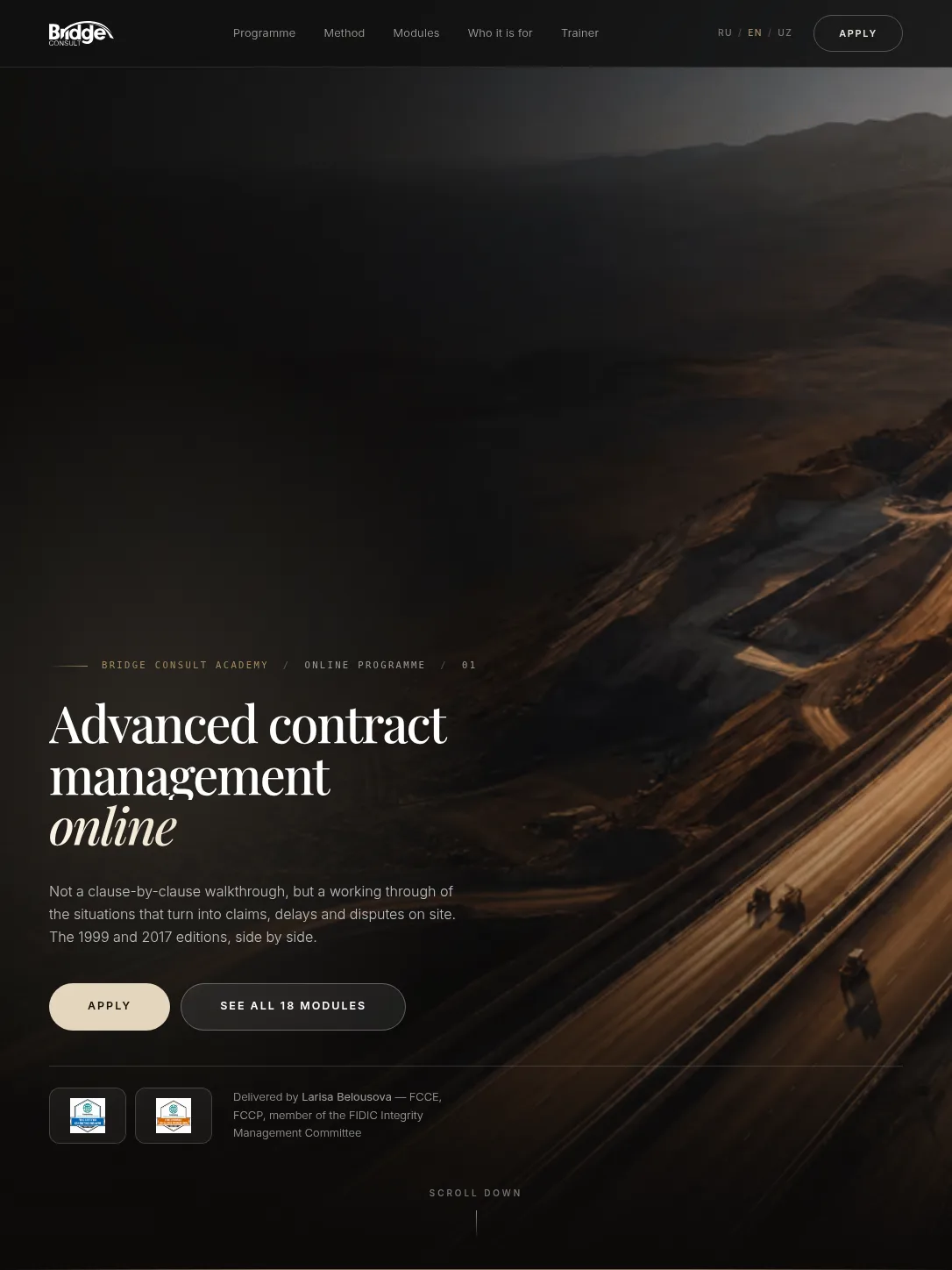
One page, eighteen modules, three languages, and not a single line of third-party JavaScript.
Astro / CSS · 2026Open caseThe logic behind the work.
Do I need a finished product or a built room?
No, and that is usually the reason to do it in 3D at all. Drawings, CAD, a packaging dieline, photographs or plain dimensions are enough to build from. It is the one way to have the film before the thing exists — which is what a launch, a crowdfunding page or an investor meeting normally needs it for.
Do you shoot live action too?
No camera crew, and I would rather say so than sell it. What is made here is 3D and 2D animation, plus editing, grading, titling and sound assembly on footage you already have or that someone else shoots. If a project genuinely needs a shoot, that is a separate supplier and I will say so at the scope stage rather than after the invoice.
What do I actually get delivered?
A master in full resolution, plus the cuts the destination needs: a muted web loop encoded for the page, 9:16 and 1:1 versions for social, and a poster frame that matches frame one. If it is going on a site I build, it arrives wired in — preloaded lazily, standing down on slow connections, with a still image underneath for anyone who never gets the video.
How long does a film take?
A short product or loop piece with one object and a handful of moves is days rather than weeks. An explainer that has to teach something — script, storyboard, animation, sound — is closer to two to four weeks, and most of that time is approvals rather than rendering. You get the fixed number and the date before it starts, like everything else here.
Can the film and the website be one job?
That is the version worth buying. The page is designed around what the film does and the film is cut to what the page can carry, so the hero does not wait on a 40 MB file and the vertical cut exists before the campaign asks for it. Split across two suppliers, this is exactly where the argument starts — and the visitor pays for it in loading time.